
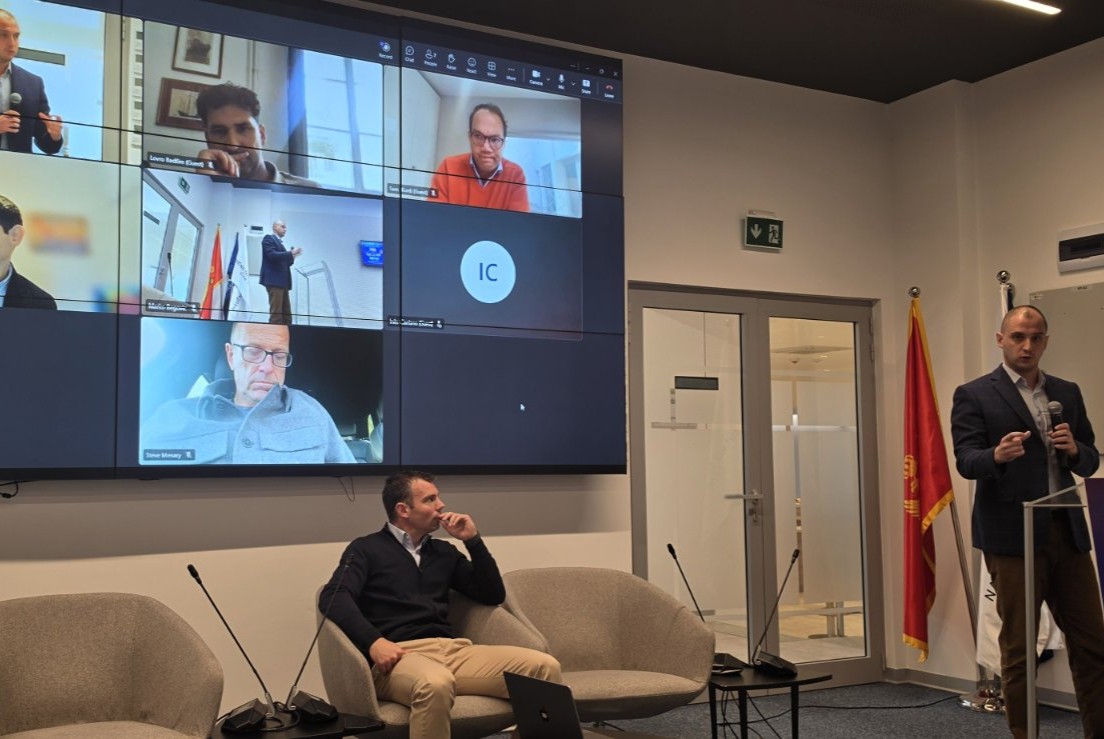
PASTECHL, the Balkan Center of Science and Innovation (BISI) at the University of Montenegro, and the Science and Technology Park of Montenegro jointly organized the panel discussion “Corruption in Sport: The Topic No One Wants to Talk About” in Podgorica on 9 November 2026. The event took place at the Science and Technology Park, with Marko Begović moderating the discussion.
Two University of Montenegro studies, conducted as part of a broader research effort supported by the Erasmus+ Sport programme, provided the starting point. Their findings suggest that political influence, nepotism, weak oversight and selective enforcement of regulations can create opportunities for corruption in the day-to-day management of sports organizations. The panel also considered the relationship between increased public funding for sport and weaker sporting results.
Lovro Badžim, a specialist in sports law and arbitration, drew on several cases from individual sports to illustrate athletes’ vulnerability to corrupt practices. He explained how athletes can be exposed to attempts to influence the course of a competition or fix its outcome.
Velimir Živković, also a specialist in sports law and arbitration, presented research on sports arbitration in Montenegro. He described the existing model as Kafkaesque, highlighting the barriers athletes and others working in sport face when seeking to exercise their rights. In his view, effective arbitration could strengthen the protection of those rights and make sports organizations more accountable.
Ivan Vukčević of the Centre for Civic Education (CCE) discussed the organization’s research into the work of the Judo Federation of Montenegro and the staging of the European Judo Championships.
Investigative journalist Steve Menary presented findings from an international report on the oversight of gambling operators in offshore jurisdictions. He explained that gaps in oversight make it difficult to establish who owns these businesses, trace financial flows and assess the scale of their operations. He warned that these gaps could make it easier for organized criminal groups to profit from match-fixing.
Investigative journalist Samindra Kunti argued that FIFA’s governance problems are more acute today than they were under Sepp Blatter. Discussing Gianni Infantino’s tenure, he pointed to weakened oversight, clientelism and opaque decision-making despite pledges of reform. He also addressed allegations of bribery and vote manipulation in the selection of tournament hosts.
The event also marked BISI’s first panel discussion. The Center announced plans to host further public discussions and invited individuals, institutions and organizations to propose timely topics from all areas of public life, particularly those rarely discussed openly, and to participate in future activities.